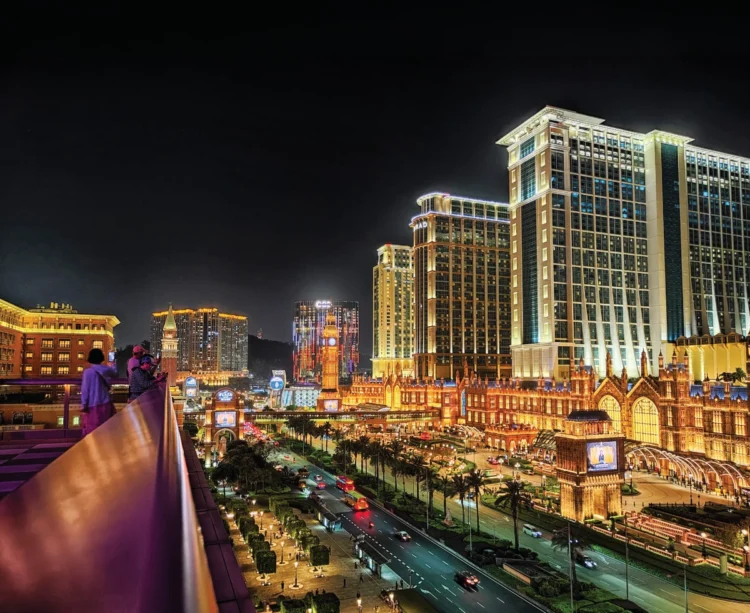
In the second part of a two-part series, Mark Tricano – a former executive at Macau’s Galaxy Entertainment Group and in the US with Harrah’s, Fontainebleau and Station Casinos – explores how to approach leadership when transitioning between the two markets.

For executives transitioning between the world’s two most significant gaming markets of Macau and Las Vegas, the professional opportunities are clear. How to prepare for a successful move is a bit less so, becoming the genesis for this series of articles. Las Vegas and Macau are both demanding, competitive and dynamic markets. They will challenge a relocating executive in ways that they may or may not anticipate. My goal is to provide some perspective and tips for success.The first article in this series identified some of the most impactful differences and similarities I experienced working in both locations. This second article takes those elements as a starting point and addresses the more practical question: given what makes these markets distinct, how can one be a more effective leader?
From my experiences, three observations have emerged that I believe offer genuine guidance. These aren’t market specific and they aren’t exhaustive, but I believe they will hold up consistently across two very different environments.
IT IS NOT ABOUT YOUR IQ, IT’S ABOUT YOUR EQ
The gaming industry does not lack for intelligent people. Both markets are full of extraordinarily capable operators who can process and understand financial statements, structure marketing programs or reconfigure gaming floors with precision to optimize results. This reality, coupled with the accelerating adoption of artificial intelligence tools, will further narrow the advantage that analytical intelligence alone provides. As such, emotional intelligence, not human intelligence, will be the most impactful differentiator of highly effective leaders.
Understanding what isn’t said can be as important as what is. Both are a test of EQ, or Emotional Intelligence. Style and nuance are necessities. In Las Vegas, EQ shows up in how you manage an extraordinarily diverse workforce, especially those with potentially very different personal incentives. Las Vegas was built by the risk-takers, and the dynamic of pay for performance is ingrained in the fabric of the culture. In Macau, EQ shows up differently. The most important conversations are often happening in a register you cannot fully access yet. The quality of your listening matters more than the quality of your opinion – at least until you have earned that understanding.
Smart will get you in the room, but style will determine what happens after you arrive.
 BE PRESENT. STAY DISCIPLINED
Business instinct, like an education, is an asset that compounds over time in ways that are difficult to identify in the moment and nearly impossible to manufacture from a distance. When walking into a new market with instincts from previous experiences, one quickly learns that what worked in one location may not necessarily work in another. Presence accelerates that recalibration.
It is not the kind of presence that comes simply from being in the building or attending the right meetings. It is the kind that comes from paying close attention to what is actually happening around you – the customer feedback, the operational barriers, the team dynamics.
At the scale these businesses operate there are always opportunities for improvement, and they are not always obvious from a distance. I found that the approach to establishing presence in both markets is quite similar. However, how quickly that presence translated into credibility differed, given the cultural dynamics of each market. Ultimately, the higher level of awareness that genuine presence produces allows a leader to identify what others miss and add greater value.
You cannot lead what you do not understand, and you cannot truly understand if you are not present.
 CONTROL WHAT YOU CAN CONTROL
Both markets will inevitably hand you circumstances that sit entirely beyond your reach. Elements such as regulatory decisions, geopolitics, macroeconomic trends or the prevailing headline of the day occur at a level where a property-level operator has no meaningful input. Executives can wear themselves out fighting those forces and, as a result, will not maximize their leadership potential. Those who identify clearly and early what sits within their sphere of influence are the ones who find that the uncontrollable matters much less over time.
To be clear, controlling what you can control is not about being passive. Actually, it’s quite the opposite. It is about knowing where to commit your energy and actively pursuing those efforts with vigor. While this dynamic exists in most competitive environments, I believe it is amplified in Las Vegas and Macau, given their scale and intensity. The cost of those distractions, in absolute terms, is proportionally greater.
Cut through the noise that prevents you from achieving your full potential. Your team will appreciate you more for it.
 CONCLUSION
At its most fundamental level, leadership is about uniting people around a common purpose. While the structural differences between Las Vegas and Macau are very real, what remains constant, in both markets, is that people want the same things from the leaders they work alongside. To feel valued. To know their contributions matter. To believe that where they are heading is worth the effort of getting there. This is as true in an integrated resort in Cotai as it is on the Las Vegas Strip, and in every market that may follow.
On a personal level, when making a move, don’t miss the opportunity to take it all in. The experience, in its entirety, is an education. Making a big career move to an unfamiliar territory provides opportunities to grow that one can never anticipate or replicate. The people who approach these environments with genuine curiosity, allowing themselves to be changed by what they find, come away with much more than those who don’t. I would not trade those experiences for anything, and I don’t think you will either.